The Latest on Teach Preschool!
Thursday, June 3, 2010
Making props for the preschool musical
Tuesday, June 1, 2010
Preparing for a musical production in preschool
Tuesday, April 27, 2010
Teaching simple songs in preschool
I wrote this article for Teaching Tiny Tots a few months ago on teaching simple songs to preschoolers. In this article, I talk about using the S-I-M-P-L-E method when introducing simple songs and fingerplays to young children.
Tuesday, February 16, 2010
Using musical instruments in the preschool classroom
There are a variety of ways you can use musical instruments in the classroom.
Create a music center and try adding...
- Baskets of musical instruments
- A CD Player
- A pretend microphone
- A mirror
- A little platform for a stage (square)
- Posters and books about music, composers, notes, and nursery rhymes.
- Staple together little books of notation paper and add drawing tools for children to create their own songs.
- Baskets of movement props like paper plates, ribbon sticks, and scarves.
- Home made instruments: Check out these awesome homemade drums and drumming activities from Irresistible Ideas for Play Based Learning!
- See this music book from Fleet of Fun
In your circle time, add musical instruments to a familiar song. Here are a few examples:
- Add a rainstick to the song "Itsy Bitsy Spider". Let the children shake the rain stick back and forth to make the sound of the rain.
- Add a rythm stick for tapping noises to songs like "Johnny Works with One Hammer" or "One Little Hammer Went Tap Tap Tap!"
- Add instruments to songs like ... "If you're happy and you know it" (ring a bell) (tap a drum) (shake a maraca).
Instead of children telling you a story - try having them dictate to you a song.
Before you go - read this article written by Lorri at PreK 360: Music Center: Open Daily
Wednesday, January 6, 2010
Preparing to sing with preschoolers
One of my most favorite things in the whole wide world is using music in the preschool classroom. I could sing and dance all day if given the chance - starting with morning greeting right through the late afternoon wrap up!
Years ago, I stumbled on the secret to building my knowledge of preschool music and fingerplays. This is something you won't be taught in early childhood education classes and you won’t read it in books either so be sure to get your pen out and write it down...
Remember...You have the power to influence student attitudes about singing - so use it to help children love to sing!
Wednesday, December 2, 2009
Extending learning through music and fingerplays in the preschool classroom
Music and fingerplays are a wonderful tool for teaching in the preschool classroom. Do you have a favorite song or fingerplay that you sing or say often with your preschool students?
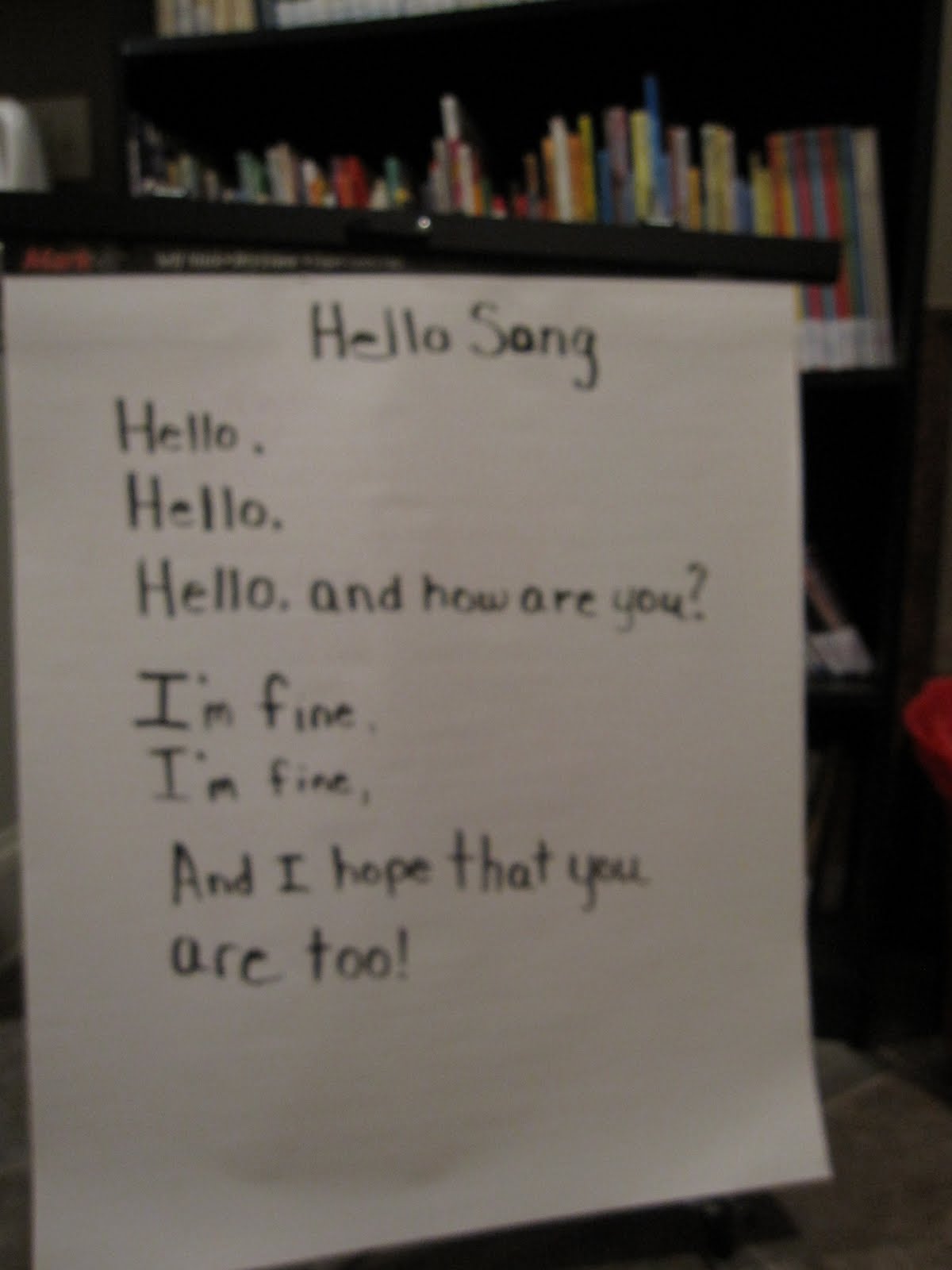
Print the words
Choose a favorite song or fingerplay that your students know well and print the words out on a large sheet of chart paper. The students already know the words by heart and now they can make the connection between what they hear, sing or say, and what they see.
Much like reading a favorite children's book, favorite songs and fingerplays can be presented to young children through print to help them draw connections between symbols and sounds. Remember, choose songs that your preschoolers already know well.
Point to the words
Once you have the words printed out, recite the song or fingerplay with your students again, only this time, point to the printed words as you do. Leave the printed page out for your preschoolers to view on their own. Some will pretend to read the words simply because they are already familiar with them.
Make word puzzles
For older preschoolers, print the words on sentence strips and then cut them apart like a puzzle. Let the children look at the printed words on the chart and see if they can recreate the words with the strips. Give your students clues like "where is the Capital letter H?" or "Where do you see a comma?". For those of you who are artistic, you may wish to illustrate the song as well to help younger preschoolers identify the different words in the song.
Sing along
As your students work to explore the words of a song or fingerplay, sing the song aloud often or recite the fingerplay often to remind them of the sounds and words they are viewing.
Adapt
For younger students, cut the words of the songs into phrases rather than individual words. For older students, try mixing up the words and see if they can put them back together. Always leave the chart out with for easy viewing and reference.
Be sure to Follow my Blog!
To read up on preschool quicktips - click here!
Monday, April 20, 2009
Music Takes Committment
I visited a two-year-old classroom on several occasions and observed that this was not a happy classroom. This was not a fun classroom. It was time to get these children singing and laughing.
I sat with the children on the floor and in a bright happy voice and introduced them to a cute little Hello Song that I use everyday when I am teaching my own class. The twos all just sat down and stared at me with big blank looks on their faces. We (the teachers and I) all laughed at their shock - it was the first time I heard any laughing from anyone in all my visits. So that was a start.
The key to getting children past the stage of shock or dislike of music is to keep singing the same songs over and over again. The more the children hear the song, the more familiar it becomes to them and to you.
It has been said that when introducing a new song, you should sing it at least four times in a row before the children will start to like it and sing along with you.
Don't give up on a new song that you have learned. Your enthusiasm will rub off and the children will start to love what you love. Sing the song often, add hand motions or other movements. As you sing the song often, you will make it your own and it will bring joy into your classroom.
Did you know music is like magic?
Want to hear some fingerplays and songs - click here!
Be sure and Follow My Blog to learn more about early childhood education.
Copyright © 2009 Deborah J. Stewart, All Rights Reserved!
Saturday, April 18, 2009
Music is like Magic
In early childhood work, music takes on a magical quality. Music can magically change the experience and atmosphere of your classroom.
If you are thinking, "I can't sing and I don't know any songs so music just isn't for me." Let me encourage you to think again. It isn't how many songs you currently know or how well you sing that creates the magic - it is knowing just a few great tunes and having fun singing them with whatever type of voice you may or may not think you have.
If singing is new to you, it may feel awkward at first but as the children hear you having fun singing or dancing to a familiar tune, they will want to join in on your fun.
Teachers can use music in the classroom for many purposes:
- To capture student's attention
- To create a positive and nurturing environment
- To engage children in the learning process
- To give guidance and instruction
- To enhance self-esteem and confidence
Next time you want everyone to look at you, instead of raising your voice - try singing a catchy tune until everyone is either singing with you or at least looking your way. Get quieter as you sing and then tell your young students what you need.
Keep up to day with this blog - be sure to Follow My Blog!
What is a fingerplay?
Listen and learn music and fingerplays.
Copyright © 2009 Deborah J. Stewart, All Rights Reserved!